

The past month has upended the AI ecosystem and cast the future landscape into serious doubt. The industry has always been fast-moving and tumultuous, but this shift is just as serious and far less discussed than the December Opus 4.5 breakthrough or the GPT o1 leapfrog.
A slew of models including Kimi K3, Grok 4.5, Muse Spark, GLM 5.2, and (the soon-to-be-public) Composer 3 all perform like top-tier models but operate at a fraction of the cost of Sol, Fable, and Opus.
This shift changes the landscape in three distinct ways, but few have noticed the simultaneous shift across all three.
Shift #1: The Duopoly of OpenAI and Anthropic No More?
Sam versus Dario. Who is going to win this ultimate, drama-filled showdown? It was exciting there for a moment with Google competing, but they crashed out in January and haven’t recovered. It’s neck and neck! Look at them making snide comments at each other in interviews and on X! Which company will IPO at a higher price, and which one will surpass the $1 trillion mark?!

OpenAI and Anthropic, considered by consensus to be the emerging duopoly (or the two companies that dominate an industry) for 2026, are... maybe not a duopoly?
Just 30 days ago, everyone knew it was a duopoly! OpenAI changed its model naming to mimic Anthropic’s while also dramatically increasing the price of its lower-intelligence models to match Anthropic’s eye-watering prices (given their level of intelligence) so that Terra = Sonnet and Luna = Haiku.
Note: To avoid offending OpenAI fans out there, it does appear that Terra and Luna are currently performing far better than their Anthropic counterparts.
Enter the latest “budget” models. In most tasks, they are close to, maintain parity with, or sometimes even exceed the capabilities of frontier models.
Some of these models are open-source and some are proprietary, but they all perform at the frontier at a fraction of the cost.
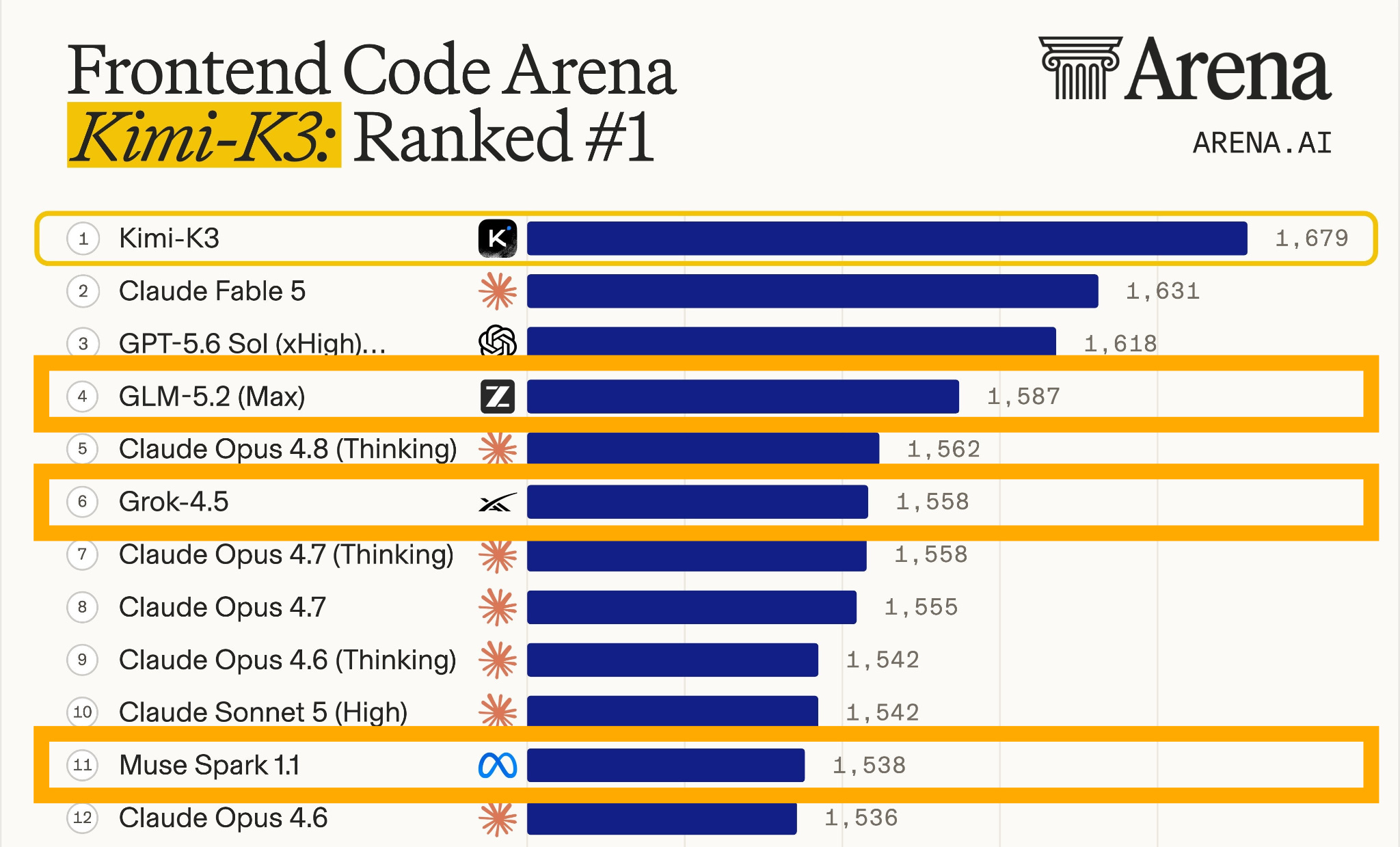
Data from arena.ai — “Budget” models highlighted
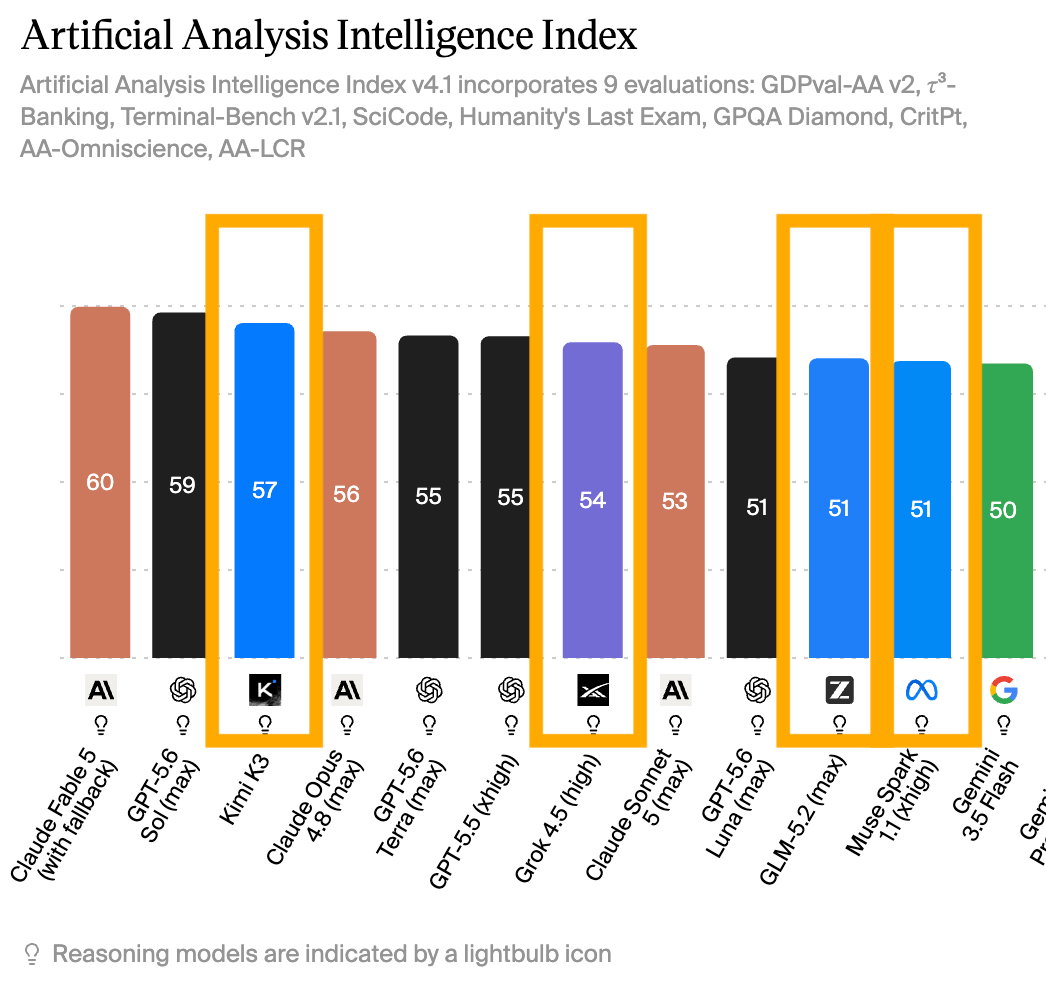
Data from artificialanalysis.ai — “Budget” models highlighted
Naysayers might blame distillation attacks by Moonshot, Z, Alibaba, and DeepSeek. Distillation attacks occur when a developer uses the outputs from cutting-edge, more intelligent models (ideally logprobs, but sometimes the tokens / words themselves) to glean (or steal, depending on one’s perspective) the model’s intelligence and then bake it into another company’s model. These attacks are very likely happening, and the depth, frequency, and morality of such practices deserve their own blog post.
However, there is no evidence that either SpaceX or Meta is using distillation attacks, and all of a sudden, they are both also launching very powerful “budget” models. Why use the recent Sonnet 5 when you can use a vastly superior model at a lower cost, or why use Sol when a similar model costs a fraction of the price?
We now have two “leaders” in OpenAI and Anthropic, two “contenders” that deliver similar quality at a fraction of the price in SpaceX and Meta, and two to three open-source “disruptors” threatening to upend the entire system. Google could not be reached for comment.
Takeaway: Powerful “budget” models are undercutting the duopoly.
Shift #2: The Economic Frontier Changed
Let’s say you could use an AI model for a single task: classifying a receipt into an accounting category. The benefit of accurately classifying each receipt is $0.10. Your annual volume of receipts to classify is 100 million. Multiplying those together, the potential value (if AI were free) is $10 million per year.
This is an under-appreciated scenario for many in the AI space because most think of AI as a coding agent rather than a knowledgeable executor. If each receipt task costs $0.15, AI will never be applied to this use case. But if the cost is $0.05, this single use case nets $5 million in value.
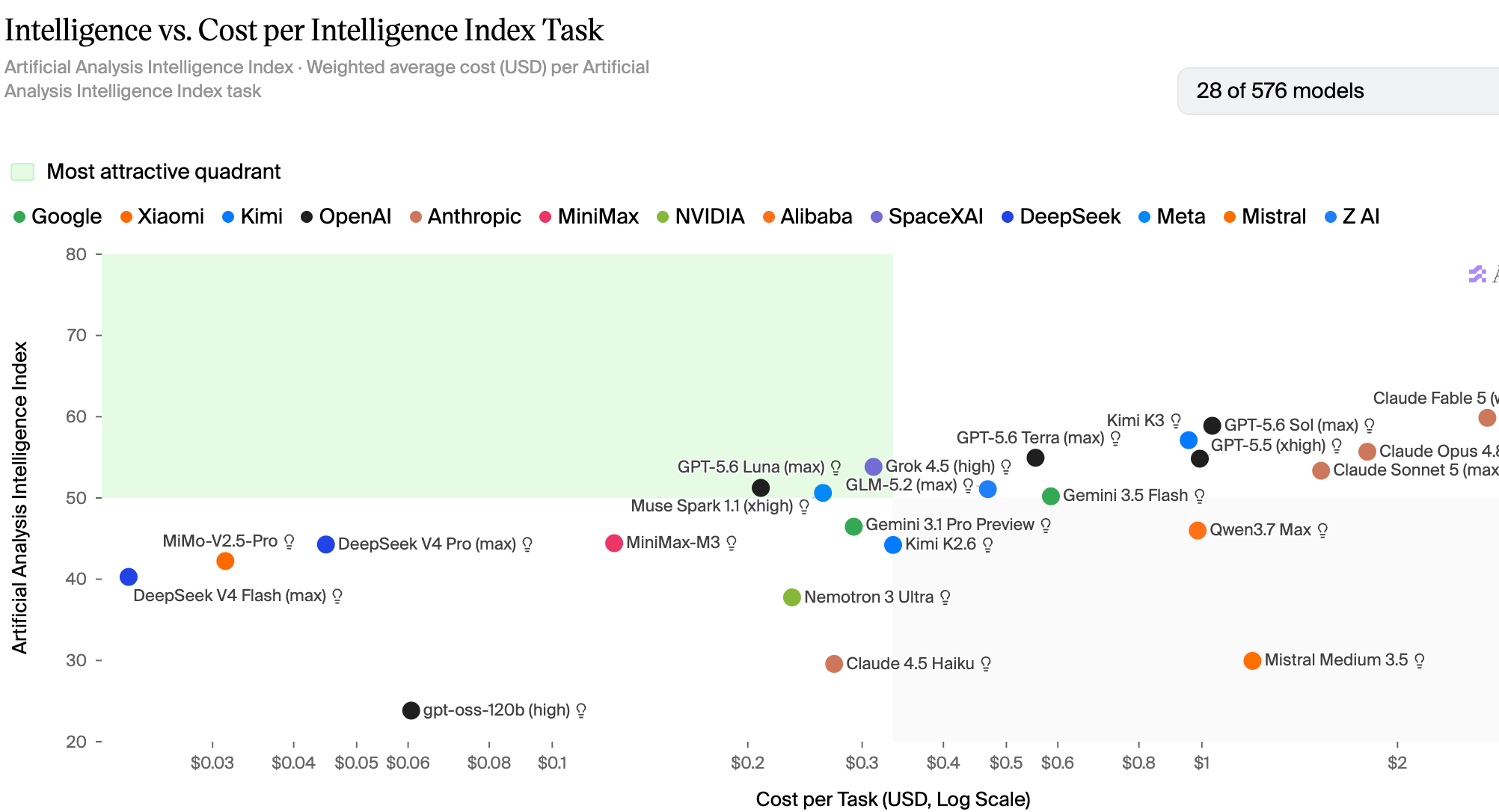
The same applies to AI’s latency (or speed). If the AI is fast, sufficiently intelligent, and meets cost requirements, it unlocks numerous consumer use cases (like real-time guidance and responses in conversations).
The “duopoly” has indicated that it is not reducing prices. Anthropic effectively does not play in the budget segment, and it appears OpenAI is going to deprecate its older models. Both players are ceding the “low-cost” ground to other competitors. But if there is one thing we learned from Clayton Christensen’s The Innovator’s Dilemma, it’s that you often get killed by the ones moving up the value chain.
These new “budget” models can perform most tasks shockingly well and consistently. Crazy coding use cases, math challenges, and physics problems are novel and fascinating, but most of “Main Street’s” economic value is not found at the cutting edge, at least not anymore. In fact, it is very hard for the vast majority of laypeople and even many hardcore AI professionals to evaluate the latest AI models because the models have often already surpassed the threshold required to fulfill everyday job tasks.
Takeaway: Even if the “budget” models may be slightly weaker in some areas, they are still sufficiently powerful to tackle the vast majority of today’s tasks and have opened up a new frontier of use cases.
Shift #3: The Chinese Open Source Angle
Finally, what on earth are these Chinese companies doing releasing open-source models?
Value accrues to the bottleneck in a system. If the intelligence is open-source and “free,” then the value does not accrue to the big labs because intelligence, in this scenario, is largely commoditized. That begs the question: who profits?
The companies that will profit from these new bottlenecks will be those who:
Produce chips
Build data centers
Provide electricity through either generation or connectivity
One hypothesis is that China may not be able to win the race for cutting-edge AI, but it could win on chips (in the medium term), data centers, and power. This doesn’t require any nefarious motives, just recognizing and leaning into existing competitive advantages.
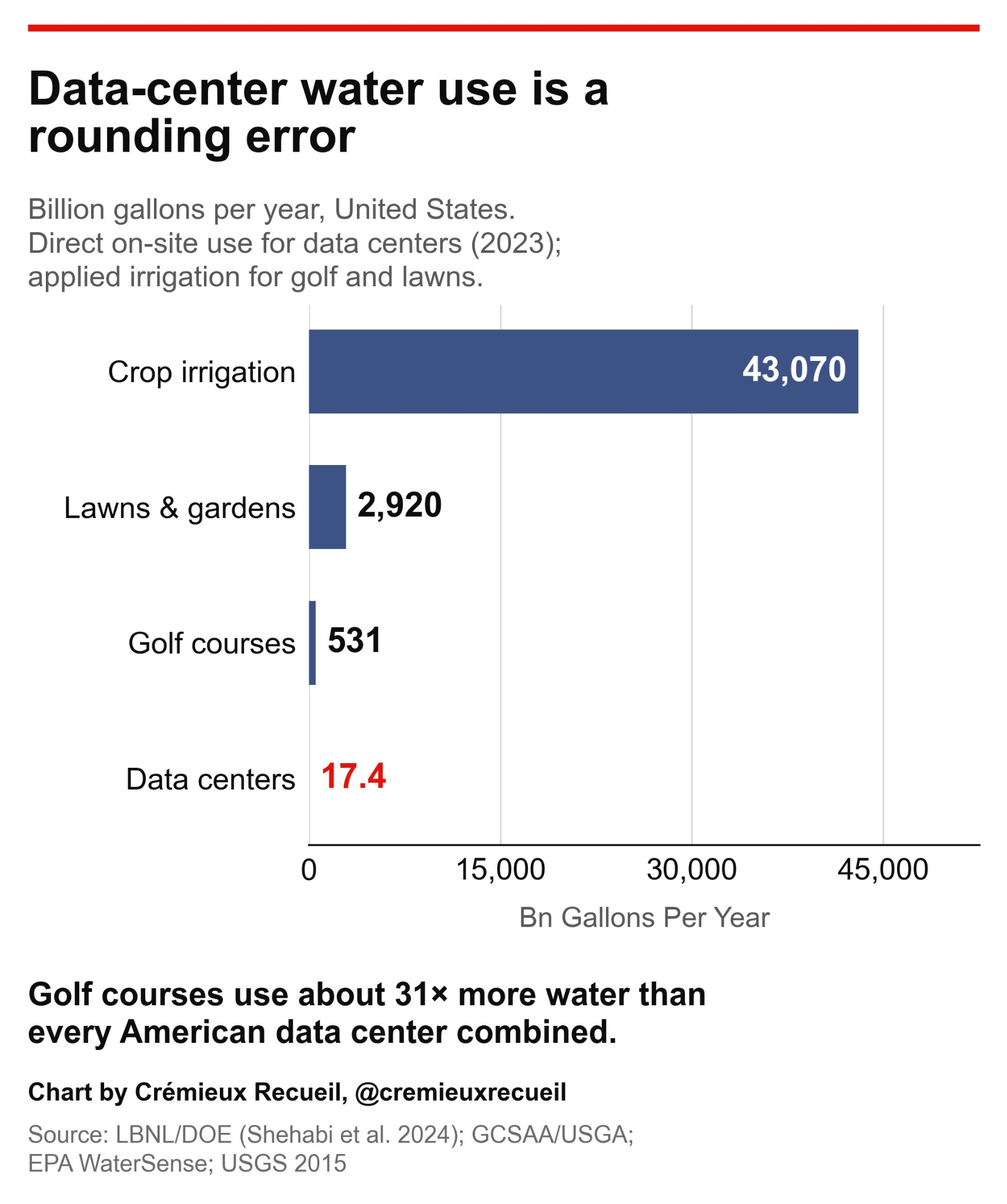
This is especially the case if the US falls behind on chips and data centers (good job, viral claims overestimating data center water consumption by 10,000%) and falls even further behind on energy generation and grid connection.
However, assuming geopolitical risk is not an issue for a moment (a big assumption... bear with me), open-source competitiveness provides a cleaner pathway for more value to be captured by end consumers due to downward pressure on prices.
Takeaway: The open-source strategy makes sense from a competitive standpoint for China, which potentially leads to more positive outcomes for the average user.
Action Items at This Pivot Point
Here is the advice I’ve synthesized from my network:
Get connected to multiple models. If your company doesn’t have an AI gateway to facilitate connecting to every model available (like LiteLLM, Bifrost, or others), invest in one.
Get familiar with these models. If you haven’t used GLM 5.2, Muse Spark, or Grok 4.5, you should give them a shot. You’ll likely be surprised at how strong they are, but you’ll also discover areas where they meet, exceed, or fall short of other frontier models.
Be willing to let go of old beliefs. Moving from a two-horse race to a six-horse race in such a short period causes whiplash, and many AI consensus truisms are no longer true.
It’s never boring, but it’s more fun this way. Good luck.